

News
S912XB128F2CALR vs. General-Purpose MCUs: A Comprehensive Analysis of Quality Differences in Automotive-Grade Chips
文章出处:瑞航达电子国际化电子元件渠道分销商 作者:电子元器件供应链服务商 发表时间:2025-12-25
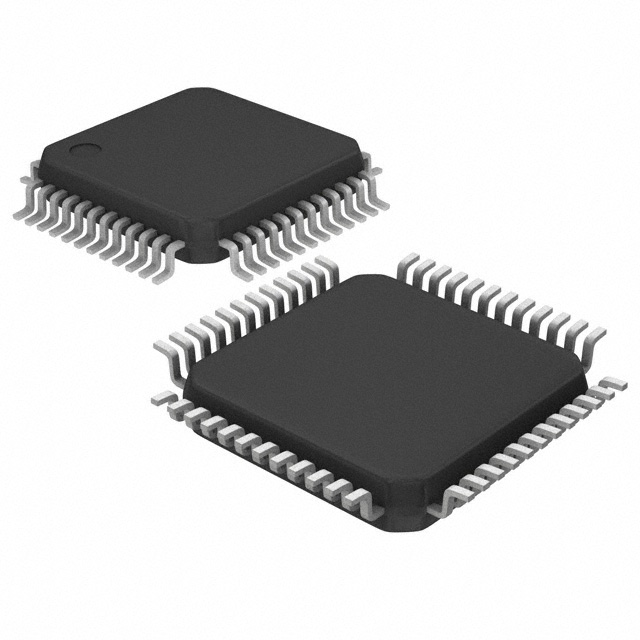
The requirements for reliability in automotive electronics are simply extremely demanding. In a speeding car, a tiny MCU failure can have serious consequences, so automotive-grade chips must be as reliable as a rock. Today, let's talk about NXP's S912XB128F2CALR, a 16-bit automotive-grade MCU. What are the essential differences between it and ordinary MCUS?
A huge difference in the operating temperature range
Ordinary MCUS generally can only operate in an environment of 0-70℃(consumer grade) or -20-85℃(industrial grade), while the S912XB128F2CALR, as an automotive-grade chip, has an operating temperature range of -40℃ to 85℃. This means that it can operate stably in the severe northern winters, the scorching southern summers, and even in high-temperature areas such as the engine compartment. For instance, a common MCU is like a flower in a greenhouse, while an automotive-grade MCU is like wild grass that can survive in all kinds of harsh environments in the wild.
The strictness of reliability standards
The S912XB128F2CALR has passed the AEC-Q100 reliability certification, which is the "access permit" for automotive electronics. It needs to undergo rigorous tests such as temperature cycling, damp heat cycling, and vibration testing to ensure long-term stable operation in the complex environment of automobiles. Ordinary MCUS usually only need to meet basic functional tests, and the testing standards of the two are completely not in the same league.
The world of difference in functional safety mechanisms
The most core highlight of automotive-grade MCUS lies in their functional safety design. The S912XB128F2CALR is equipped with multiple hardware safety mechanisms, including voltage/temperature monitoring circuits and watchdog timers, which can detect and isolate faults in real time. Ordinary MCUS may only have basic watchdogs and lack these advanced security protections. Just as cars have active safety systems such as airbags and ABS, ordinary vehicles may only have simple braking.
A significant contrast in the failure rate indicators
The failure rate requirement for automotive-grade chips is lower than 10 FIT(that is, less than 10 failures per billion hours), meeting the highest functional safety level requirement of ISO 26262 ASIL-D. The failure rate tolerance of a common MCU is usually at the 100-1000 FIT level, with a gap of ten or even a hundred times. This difference is like the quality distinction between precision instruments and ordinary tools.
Long-term guarantee throughout the life cycle
Automotive-grade MCUS like S912XB128F2CALR typically have a design life of over 15 years and can provide supply guarantees for automakers for more than 10 years. The life cycle of a common MCU is generally only 3 to 5 years, and supply chain risks may occur due to production halts. This long-term stability is of vital importance to car manufacturers, after all, automotive products require long-term maintenance.
The essential differences in application scenarios
Automotive-grade MCUS like S912XB128F2CALR are mainly applied in key automotive electronic systems such as engine control, braking systems, and airbags. In these scenarios, any minor failure could lead to serious consequences. Ordinary MCUS are mostly used in consumer electronic products, such as home appliance control and toys. The consequences of faults are usually just the failure of product functions and do not pose a threat to personal safety.
The balanced consideration of cost and value
The development cost of automotive-grade MCUS is indeed relatively high, with a unit price typically ranging from 20 to 50 US dollars and a development cycle of 3 to 5 years. However, considering the security guarantee and long-term reliability it brings, such an investment is worthwhile. Although ordinary MCUS are low in cost (2 to 10 US dollars), saving this amount of money in critical security applications may bring huge risks.
As a member of the NXP S12X series, the S912XB128F2CALR integrates a 16-bit HCS12X core, 128KB Flash memory, 66MHz main frequency and other features, achieving a perfect balance between performance and reliability. It is like a well-trained special forces soldier, capable of completing critical tasks in all kinds of extreme environments.
If you are looking for a reliable automotive-grade MCU solution or have any other questions about the S912XB128F2CALR, please feel free to contact us at any time. We focus on the supply of automotive electronic components, with rich industry experience and a professional team. We can provide you with a one-stop solution from selection to application. Consultation hotline: 15928527272. Let us safeguard your automotive electronics project!