
News
HI-3110PSTF Suppliers: Technical Analysis and Application Guide for Avionics CAN Bus Controllers
文章出处:瑞航达电子国际化电子元件渠道分销商 作者:电子元器件供应链服务商 发表时间:2025-12-05
Modern avionics systems are confronted with increasingly complex data transmission requirements. From flight control to engine management, from on-board entertainment systems to test equipment, reliable and efficient communication solutions are needed. Among numerous communication protocols, CAN(Controller Area Network) bus has gradually become an important choice in the field of avionics due to its real-time performance, reliability and cost-effectiveness. The HI-3110PSTF launched by Holt Integrated Circuits, as a CAN controller specifically designed for avionics, integrates CAN protocol controller and transceiver functions, providing a compact and complete solution for avionics system design.
Analysis of the Technical Characteristics of HI-3110PSTF
The core advantage of the HI-3110PSTF lies in its single-chip integration of a CAN protocol controller and an analog interface transceiver, which significantly saves circuit board space, reduces system complexity, and is fully compatible with the CAN 2.0B protocol. Complies with ISO 11898-1:2003 (E) specification and ISO 11898-5 transceiver standard.
ARINC 825 standard and Avionics applications
The full name of the ARINC 825 Specification is "General Standard for Airborne CAN Network". It is a high-level specification based on the CAN physical network, formulated by the Aeronautical Electronic Engineering Committee. The latest version is the ARINC Specification 825-2 released in July 2011. This specification divides the 29-bit identification of CAN 2.0B extension frames, with the top 3 bits used for the logical communication channel (LCC) identification. In order of priority from high to low, they are: abnormal event channel, normal operation channel, node service channel, user-defined channel, Test and maintenance channel, and CAN Basic Frame compatibility channel.
Practical applications in avionics
CAN bus has been widely applied in modern aircraft platforms. New-generation commercial aircraft such as the Airbus A380 and Boeing 787 have all deployed CAN networks in multiple subsystems including the cockpit, engine control, and flight control.
The HI-3110PSTF, as a CAN controller that complies with the ARINC 825 standard, can be directly applied to these avionics systems. Its integrated transceiver function enables direct connection to the CAN bus without the need for external components. Combined with the host serial peripheral interface (SPI), it achieves the minimum board space occupation.
Supplier Selection and Procurement Guide
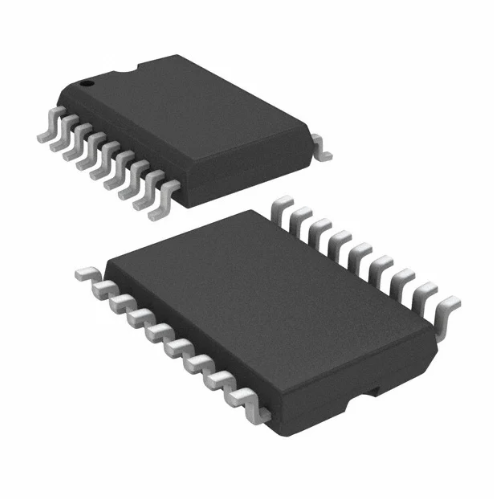
When choosing a HI-3110PSTF supplier, several key technical parameters need to be paid attention to. The device adopts an 18-pin SOIC package, complies with RoHS standards, and features a lead-free design. The operating temperature range is from -55℃ to 125℃, the power supply voltage range is from 4.75V to 5.25V, and the packaging form is SOIC-18.
The HI-3110PSTF has multiple alternative models to choose from, including the HI-3110PST, HI-3110PSIF and HI-3110PSI, etc. Among them, HI-3110PST is a completely alternative model. Its main performance parameters and functional characteristics are consistent, and the terminals and packaging are in line. Replacement does not require modification of the existing circuit. HI-3110PSIF and HI-3110PSI are models with similar functions, and their device functional characteristics are consistent, but their main parameters are not the same. After correcting the circuit structure, they can be substituted.
Industry application cases and development trends
The HI-3110PSTF has a wide range of application scenarios in the field of avionics. In a flight management system, it can be used for data communication between various sensors and controllers. In the engine control system, it can achieve a distributed control architecture. In the airborne entertainment system, it can provide reliable multimedia data transmission.
The practical application case of the power distribution system of a certain type of aircraft shows that the integration of CAN bus in avionics systems requires a focus on the system architecture design and verification process. Typical problems found in the integration test include improper setting of terminal resistors and abnormal signal amplitudes, etc. All these issues need to be fully considered and preventive measures taken during the design stage.
In the future, we CAN expect to see more CAN controller solutions with higher integration and lower power consumption, as well as more complete development tools and technical support systems. All these will promote the wider application of CAN bus in the field of avionics.
If you are looking for a reliable HI-3110PSTF supplier or have any other questions about avionics CAN bus solutions, please feel free to contact us at any time. We focus on the supply of high-reliability electronic components, with rich practical experience and a professional team. We can provide you with a one-stop solution covering everything from component selection to system integration. Consultation hotline: 15928527272. Let us safeguard your avionics project!