

News
BMM150 vs. Similar Geomagnetic Sensors: Which Manufacturer Is More Worth Choosing
文章出处:瑞航达电子国际化电子元件渠道分销商 作者:电子元器件供应链服务商 发表时间:2026-01-19
Geomagnetic sensors are not something new, but their development is quite interesting. From the early Hall elements to the highly integrated MEMS chips we have today, the size of this device has shrunk by a hundred times, and the power consumption has decreased by ten times. This is no joke! Nowadays, geomagnetic sensors are like the tiny compasses in our mobile phones, helping devices sense directions, navigate, and even keep stable during drone flights.
BMM150: A Masterpiece of Bosch's Technology
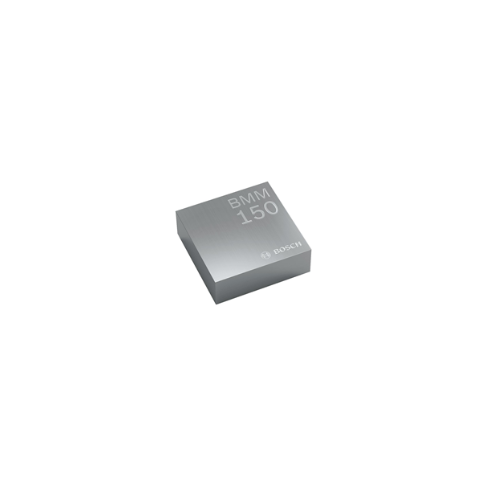
When it comes to BMM150, it is a remarkable achievement of Bosch Sensortec. This three-axis digital geomagnetic sensor is packaged in WLCSP, with an area of only 1.56×1.56mm² and a height of just 0.60mm. It is incredibly small! It supports two digital interfaces, I²C and SPI, with a resolution of up to 0.3μT. The typical measurement range is ±1300μT for the x and y axes, and ±2500μT for the z axis.
The most impressive aspect is its power consumption performance: the average current consumption in the low-power mode is only 170 μA, and in the normal mode it is just 500 μA. For mobile devices, this data is truly crucial because battery life is always the top concern for users. The temperature range is from -40°C to 85°C, which basically covers most application scenarios.
BMM150 works in conjunction with the accelerometer and gyroscope in the Yonai AI translator device, forming a nine-axis sensing system. The absolute reference direction it provides effectively compensates for the integration drift of the gyroscope and the dynamic errors of the accelerometer, enabling the device to maintain stable direction perception even in complex movements.
Horizontal comparison of similar products
QMC5883L: A Challenge for Domestic Up-and-Coming Brands
QMC5883L is a product of QST (Silicon Sense Technology). It employs the third-generation AMR technology. This sensor indeed has impressive parameters: a resolution of 2mG/LSB, 16-bit analog-to-digital conversion, and a measurement range of ±8G. In terms of power consumption, it also performs exceptionally well, with a working current of only 75μA and a standby current as low as 3μA.
The QMC5883L is widely used in fields such as unmanned aircraft and intelligent parking detection. A certain brand's 4K high-definition aerial photography drone uses this chip. It calculates motion compensation in real time based on the flight posture, with a control accuracy of ±0.02°. This level of precision is truly impressive.
HMC5883L: A Classic Product from Honeywell
Honeywell's HMC5883L is a widely used magnetic field sensor, featuring a 3.0×3.0×0.9mm 16-pin LCC package. It operates based on the magnetoresistive effect and contains a high-resolution HMC118x series magnetoresistive sensor as well as Honeywell's patented integrated circuit.
The measurement range of HMC5883L is from 0.1 gauss to 8 gauss, and it features a 12-bit analog-to-digital converter for high accuracy, enabling the compass heading to be controlled within 1° to 2°. It adopts an I2C serial bus interface, which is simple to use, occupies few pins, and is convenient for connection with microcontrollers.
LSM303 Series: Integrated Solution from STMicroelectronics
STMicroelectronics' LSM303 series integrates a three-axis accelerometer and a magnetometer. The LSM303D is a typical example of this. This module has a size of only 2×2×1mm and includes a three-axis magnetic sensor and a three-axis acceleration sensor.
The LSM303 can accurately measure the direction and magnitude of the external magnetic field. The acceleration sensor is used to compensate for the tilt angle to ensure that the device is pointed in the correct direction. Many mobile phone manufacturers such as Xiaomi have adopted products of this type from STMicroelectronics. This shows the recognition of this product in the consumer electronics field.
MPU9250: The All-Round Champion of the Nine-Axis Integrated System
The MPU9250 is a nine-axis motion sensor developed by InvenSense, which integrates a three-axis gyroscope, a three-axis accelerometer, and a three-axis magnetometer. The advantage of this sensor lies in its high integration; a single chip can meet all the requirements for motion sensing.
The MPU9250 comes with a digital motion processor, the DMP hardware acceleration engine, which can integrate the data from the nine-axis sensors and output complete 9-axis fusion calculation data to the application end. With DMP, developers can easily implement attitude calculation, reducing the load on the operating system from motion processing operations.
Application scenario adaptation analysis
The requirements for geomagnetic sensors vary greatly depending on the application scenarios. For consumer electronics such as smartphones, the small size and low power consumption of the BMM150 are particularly advantageous, which is why many mobile phone manufacturers have chosen it.
The application of unmanned aerial vehicles has extremely high requirements for precision. The QMC5883L stands out in this regard, with its ±0.02° control accuracy being truly impressive. The industrial control field may place greater emphasis on stability. The maturity and reliability of the HMC5883L make it a good choice.
For applications that require a complete motion sensing solution, the nine-axis integrated scheme of the MPU9250 can significantly simplify the system design. While the six-axis integrated scheme like the LSM303 strikes a good balance between cost and performance.
There is no absolute answer when choosing a geomagnetic sensor. The key lies in finding the product that best meets your application requirements. The BMM150, leveraging Bosch's technical strength and excellent comprehensive performance, has a distinct advantage in the consumer electronics sector; the QMC5883L is renowned for its high precision and performs well in professional applications; the HMC5883L, as a classic product, is stable and reliable; the LSM303 series and MPU9250 are known for their high integration.
If you still have any questions about the selection of geomagnetic sensors, or if you need more detailed technical support, please feel free to contact us at any time. Chengdu Ruihangda Electronic Technology Co., Ltd. has 20 years of industry experience and has served over 860 customers worldwide, covering fields such as medical industrial control, smart home appliances, 5G communication, instruments and meters, and new energy industry applications. We can provide you with professional selection suggestions and technical support to help you find the most suitable geomagnetic sensor solution. Consultation hotline: 15928527272. Let us safeguard your circuit protection needs!